
04/12/2026
ess Is More: How Mies Defined Chicago’s Quiet Power
BY RIVER NORTH CHGO
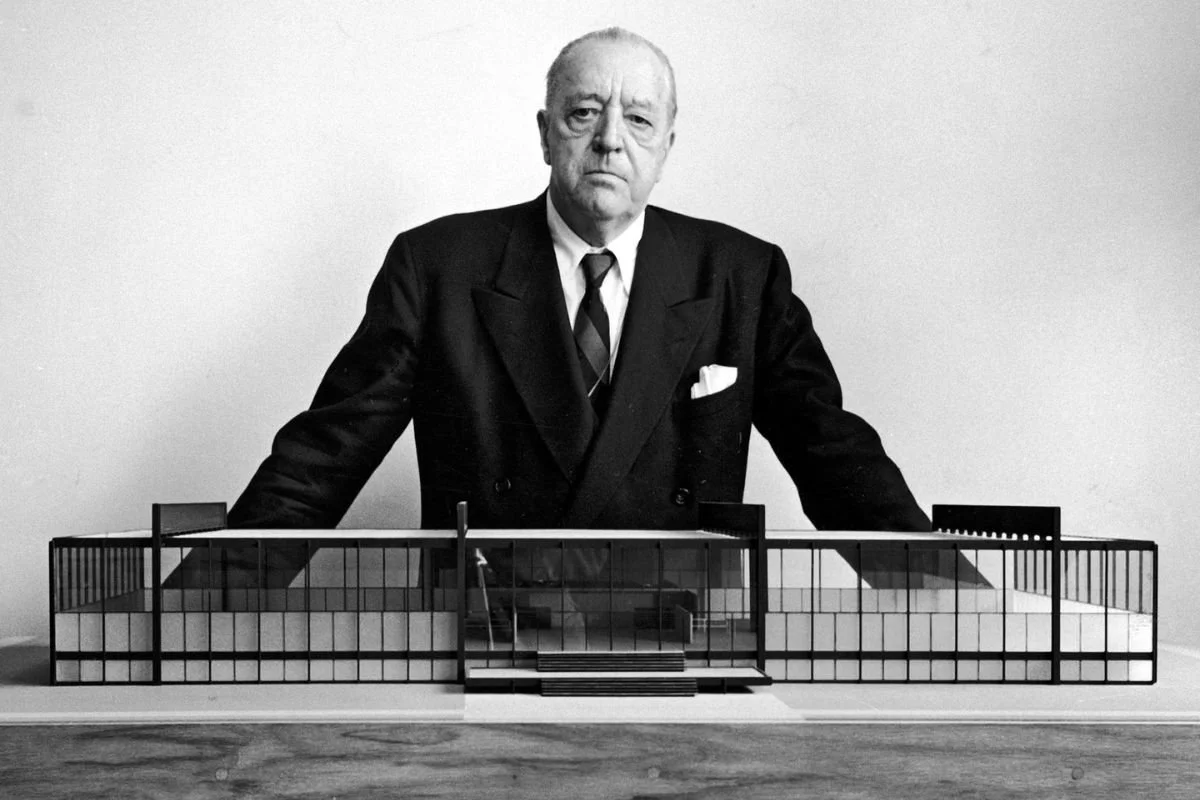
There are cities that evolve, and then there are cities that edit themselves. Chicago, particularly along the polished edge of River North, belongs to the latter. It is a place that has learned, through fire, reinvention, and ambition, that refinement is not about excess, but precision. Few architects understood that instinctively, and expressed it as rigorously, as Ludwig Mies van der Rohe.
Mies didn’t just design buildings. He stripped them down to their essence, interrogating every line, every joint, every surface until only what mattered remained. “Less is more” wasn’t a slogan.it was a discipline. And nowhere in Chicago does that discipline stand more quietly, and more powerfully, than in 330 North Wabash.
Completed in 1973, the former IBM Building rises with an almost unnerving restraint. Fifty-two stories of steel and glass, it doesn’t shout for attention along the riverfront, it commands it by refusing to compete. In a skyline that often leans toward spectacle, this tower operates like a perfectly tailored black suit: understated, exacting, impossible to ignore once you understand what you’re looking at.
That’s the thing about Mies. His work rewards attention. At first glance, 330 North Wabash can feel simple, just a dark, rectilinear form set against the water. But linger for a moment and the details begin to unfold. The exposed steel mullions create a rhythm across the façade, a grid so precise it feels almost musical. The glass reflects the shifting moods of the Chicago River and the sky above it, turning the building into a living surface, never static, always in dialogue with its surroundings.

Source: en.wikipedia.org
It’s not decoration. It’s control. And that control is exactly what River North, in its current form, aspires to embody.
Today, River North is a study in curated energy. It’s where galleries meet restaurants, where design studios sit above cocktail bars, where ambition is dressed well but never feels accidental. The neighborhood has evolved from its industrial past into something sleeker, more intentional, a place that understands the value of presentation without losing sight of substance.
In many ways, it’s a very Miesian transformation.
Before it became a playground for design-minded professionals and cultural tastemakers, River North was raw, utilitarian, even rough around the edges. Warehouses, printing houses, and manufacturing spaces dominated the landscape. Function ruled. But as the city shifted, so did the neighborhood, refining itself not by abandoning its roots, but by editing them.
That’s the Mies playbook.
Mies arrived in Chicago not just as an architect, but as a philosophical force. Having led the Bauhaus in Germany before its closure under political pressure, he brought with him a belief that design should be honest, rational, and stripped of unnecessary ornament. Structure should be visible. Materials should speak for themselves. Beauty should emerge from clarity, not decoration.
Chicago, with its grid system, its industrial backbone, and its relentless pragmatism, was the perfect canvas.
And 330 North Wabash feels like a culmination of that relationship. Positioned directly on the river, the building doesn’t just occupy space, it frames it. The plaza at its base creates breathing room, a pause in the density of the city. It allows the building to be seen, to be experienced in full, rather than swallowed by its surroundings. That decision alone speaks volumes. It’s not about maximizing square footage; it’s about maximizing impact.
River North has adopted a similar philosophy in its own evolution. The best spaces in the neighborhood, its galleries, its boutiques, its restaurants, understand the power of restraint. They don’t overwhelm; they curate. They leave room for experience, for atmosphere, for the subtle interplay between design and human presence.
Walk through River North on any given evening and you’ll see it. Clean-lined interiors glowing through glass façades. Carefully considered lighting. Materials that feel deliberate, stone, steel, wood, used with intention rather than excess. It’s a neighborhood that has learned to edit itself, to present only what matters.
That instinct traces back, whether consciously or not, to figures like Mies.
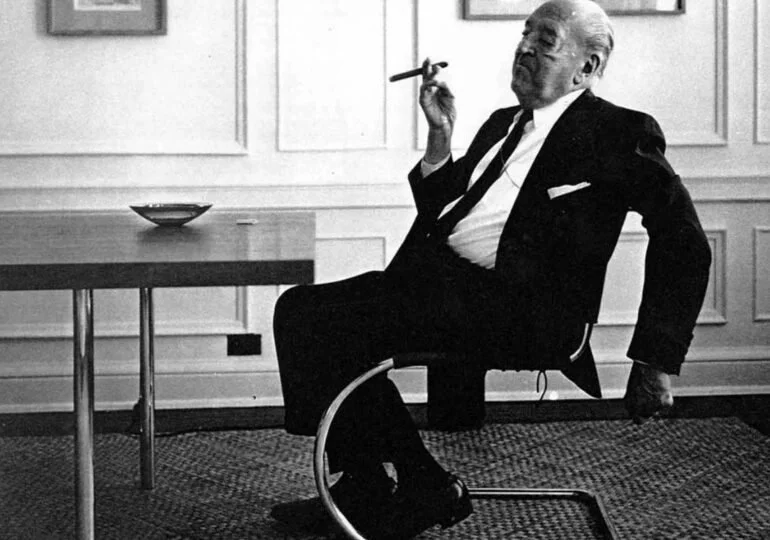
But what makes Mies truly relevant today isn’t just his aesthetic, it’s his attitude. In an era increasingly defined by noise, speed, and overproduction, his work feels almost radical in its restraint. He believed in slowing down the process, in refining ideas until they reached a kind of architectural clarity. There’s confidence in that approach. It assumes that if something is truly well-designed, it doesn’t need to scream.
Source: www.archieinteriors.com
330 North Wabash doesn’t scream. It stands.
And that distinction matters in a place like River North, where the temptation to overstate—to be louder, flashier, more immediately attention-grabbing, is always present. The neighborhood’s most enduring spaces resist that temptation. They understand that longevity comes from precision, not excess.
There’s also a deeper layer to Mies’s work that resonates with the identity River North continues to build: transparency. Literally, in the case of glass and open façades, but also philosophically. His buildings reveal their structure. They don’t hide how they stand; they celebrate it.
In a neighborhood that prides itself on authenticity, on showcasing artists, makers, designers—this idea feels particularly relevant. River North doesn’t just want to look good; it wants to show how things are made, where ideas come from, what processes lie beneath the surface. It’s a place that values both the finished product and the story behind it.
Mies would have appreciated that.
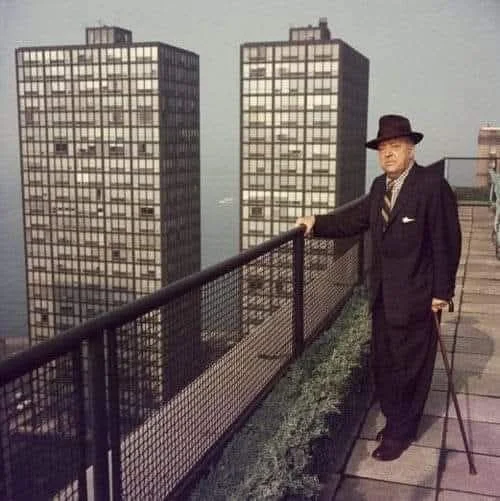
And yet, for all its intellectual weight, his work is never cold. That’s a common misconception. Stand by the river and look up at 330 North Wabash as the light changes throughout the day, and you’ll see something almost poetic. The reflections shift, the grid softens, the building becomes less of an object and more of an experience. It engages with its environment in a way that feels alive, responsive.
River North operates on that same wavelength. It’s not static. It shifts from day to night, from gallery openings to late dinners, from quiet mornings to crowded sidewalks. It’s a neighborhood in motion, but one that increasingly understands the value of structure beneath that movement.
That balance, between energy and control, expression and restraint—is where Mies’s influence feels most alive.
“Less is more” isn’t about having less. It’s about making more out of what remains. It’s about clarity, intention, and the confidence to let good design speak for itself.
In River North, that philosophy isn’t just preserved in steel and glass along the riverfront. It’s echoed in the way the neighborhood presents itself to the world: edited, intentional, and rooted in a deep understanding that true style, like true architecture, doesn’t need to shout to be heard.